THE HALLOWEEN EDIT / 03

3 classic Halloween costumes

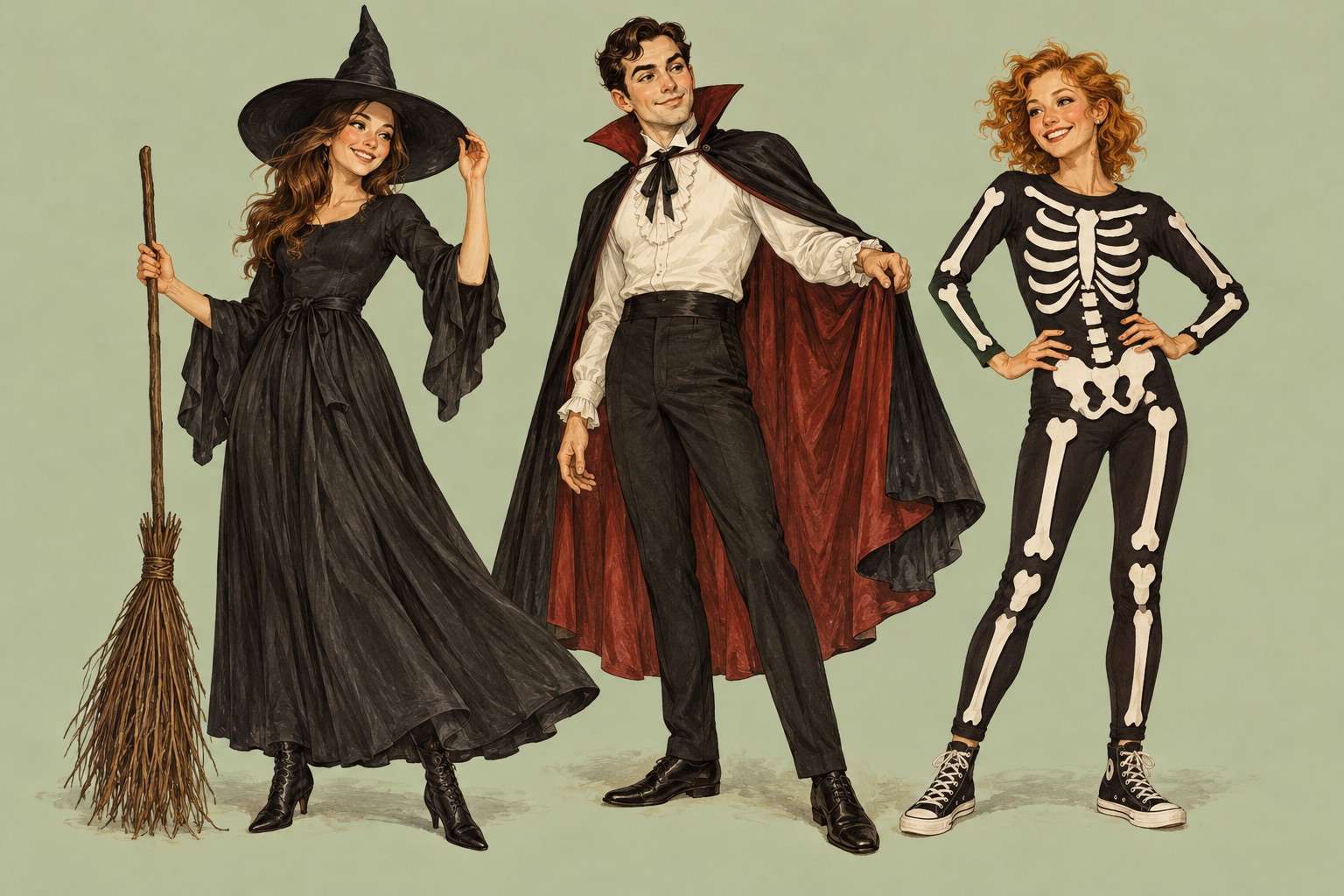
Witch, vampire, or paper skeleton: compare three classic Halloween looks, then follow the materials and instructions below on this same page.

OPTION 01 / Classic costume · Black wardrobe

The classic witch

A black outfit and pointed hat are the foundation of this familiar Halloween look.

How to put it together

  1. 01

    Choose a black base outfit appropriate for the weather and where you will be walking.

  2. 02

    Add a pointed hat. Borrowing a hat is the simplest way to finish this version.

  3. 03

    Use a shawl for an extra layer. Keep hems clear of the floor and skip a broom if it gets in the way.

Good to know

This version needs a hat. If you do not have one, choose the paper cat ears instead of relying on a last-minute delivery.

↑ Back to the options
OPTION 02 / Classic costume · Dress-up basics

The classic vampire

A white shirt and a dark outer layer create a restrained, old-fashioned vampire look.

How to put it together

  1. 01

    Wear the white shirt with your dark trousers or skirt.

  2. 02

    Add a dark jacket, or a cape that stops well above the floor. Do not fasten anything tightly around your neck.

  3. 03

    Add a red pocket square or loosely worn scarf if available. Fangs and fake blood are optional.

Good to know

A jacket is a practical substitute for a cape. This version avoids mouth accessories and face makeup.

↑ Back to the options
OPTION 03 / Classic costume · Paper details

The paper skeleton

Turn a plain black top into a graphic skeleton-inspired costume using simple white paper shapes.

How to put it together

  1. 01

    Cut one narrow strip for a spine and six short curved strips for three pairs of ribs.

  2. 02

    Lay the shirt flat. Arrange the ribs on either side of the spine and check the shape before attaching.

  3. 03

    Test the tape on a hidden area first, then attach the shapes to the outside of the shirt. Put it on and check that you can move.

Good to know

This is a decorative bone pattern, not an anatomical diagram. Paper details work best indoors and in dry weather.

↑ Back to the options
Illustrative images show a visual direction. Making instructions are editorial drafts; completion times and results have not been tested.